If you have any questions, you are always welcome to contact us. We'll get back to you as soon as possible, within 24 hours on weekdays.
Customer Support
Questions? Issues? Configuration assistance? Not finding a product on our site? Our live chat support is here to help Monday through Friday, 8AM to 5PM PST. For urgent matters outside these hours, feel free to submit your request.
Request a Quote
Contact us at sales@proficium.com or +1 (510) 744 9660 for immediate assistance or quotes on large quantities.
Evaluations
Our free evaluation program lets you borrow our Proficium products for hands-on testing and evaluation. More info >
Product Details
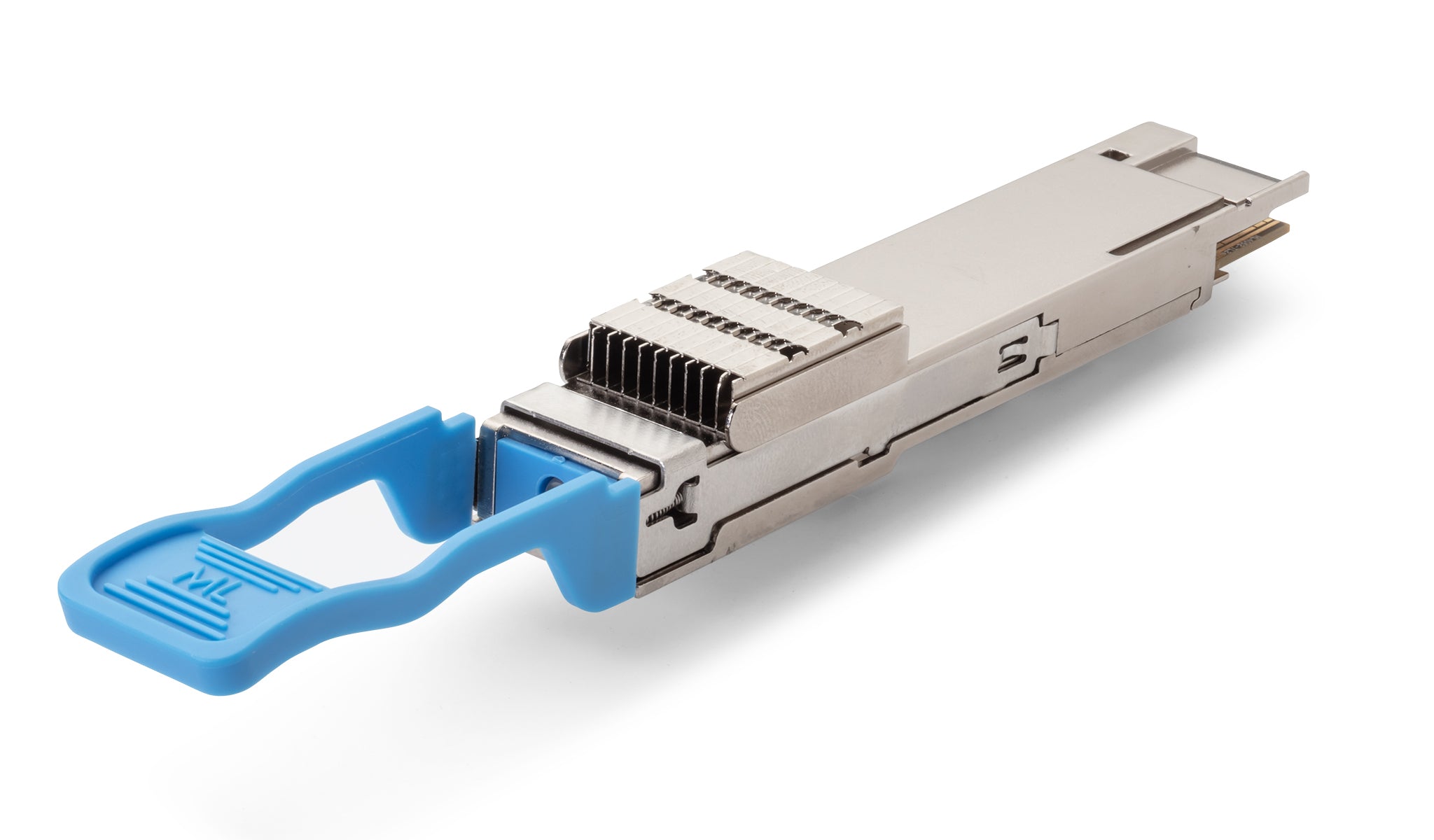
The O800-LBP provides a straightforward method to test OSFP ports at every level of the switch production process. The electrical loopback (ELB) acts as a fully featured OSFP transceiver and is used for testing OSFP transceiver switch ports during physical layer tests and system bring-up.
The O800-LBP is designed for 800 Gigabit Ethernet applications and provides 8x112G RX and TX lanes, I2C module management interface and all the OSFP SFF hardware signals. The O800-LBP loops back 8 lane 112 Gbps transmit data from the Host back to 8-lane 112 Gbps receive data port to the Host. Ideal for R & D validation, production testing, and field testing, the O800-LBP follows the CMIS Rev 3.0 standard and is packaged in standard MSA housing compatible with all OSFP power classes.
Loops back TX & RX with good performance SI Traces
Built with advanced PCB Material
MSA Compliant Shell with latching mechanism
Ten thermal spots
Can emulate all OSFP power classes
Can dissipate up to 29.5W
I2C Terminated by microcontroller, I2C slave compliant with MSA
Implements MSA Memory Map with programmable new pages
DISCLAIMER: 800G OSFP 8x112G Passive Loopback Module specifications and external physical characteristics depicted in photos, illustrations, or descriptions may vary slightly. These variations may include, but are not limited to, case designs, pull tab colors or shapes, latch styles or colors, label sizes and placement, or connector housing details. Such cosmetic or mechanical differences do not affect the form, fit, function, or compliance of the product.